
Accessibility by need
- Wheelchair user Yes
- Person using mobility aids Yes
- Blind or low-vision person No
- Deaf or hard-of-hearing person Yes
- Person with a temporary difficulty Yes
- Person with a baby Yes
- Senior (65+) Yes
- Pregnant women Yes
Accessible features and amenities
Setting
- Pedestrian zone
- Old town
- Historic site
Amenities
- Pets allowed
- Restaurant
- Food available
- Currency exchange
- Bank
About
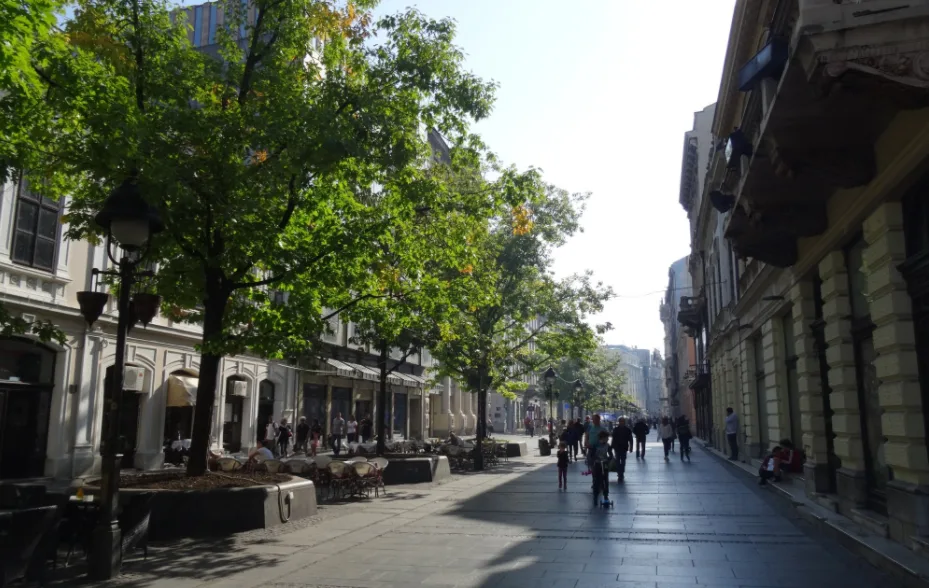
Knez Mihailova Street is a pedestrian zone, shopping center and street protected by law as one of the oldest and most valuable city monumental ambiences, with a number of representative buildings and cottages built in the late 1970s. It is believed that even during the time of the Romans, this was the center of the settlement Singidunum, and in the time of the Turks in this area were streets with gardens, fountains and mosques. In the middle of the 19th century here in the upper part was the garden of Prince Aleksandar Karadjordjevic. After the development of the Belgrade Regulatory Plan, which was made by Emilijan Josimović in 1867, the street was quickly built and got its physiognomy and content. In 1870, the city administration officially baptized the street giving it the name - Knez Mihaila Street.
The period when Knez Mihailova Street in Belgrade was traced, between 1867 and 1880, signifies the abandonment of Belgrade's styche development and the higher stage of urbanization of the city. Today's situation shows that the street has retained authentic dimensions, profiles and direction of expansion. The buildings were created at one time and have unique architectural features, and the used construction materials, constructions, functions and stylistic processing belong to the period of evolution of Belgrade architecture, which marks a break with the Balkan and the adoption of European styles. The process of Europeanization has influenced the development of the civic class and the formation of a trading stock whose representatives in their newly formed street build their own buildings and palaces and opend trade activities. Although during the 20th century some of the buildings, which formed the front of the street, were changed or replaced by a new one, Knez Mihailova retained the character of a representative trade street. By the 20th century, Knez Mihailova Street became a cultural center of the capital.
The street is mostly adapted for people with disabilities and people with special needs, noting that there are no guide lines for blind people.
Visitor experiences
Nobody has rated this place yet. Have you been here? Your experience helps others.
Rate accessibility